Published on Jan 09, 2026
Last modified on Jan 13, 2026
“Just Give It Time:” How Poor Postpartum and Menopause Care Upended this Patient’s Life for Decades
5 min read
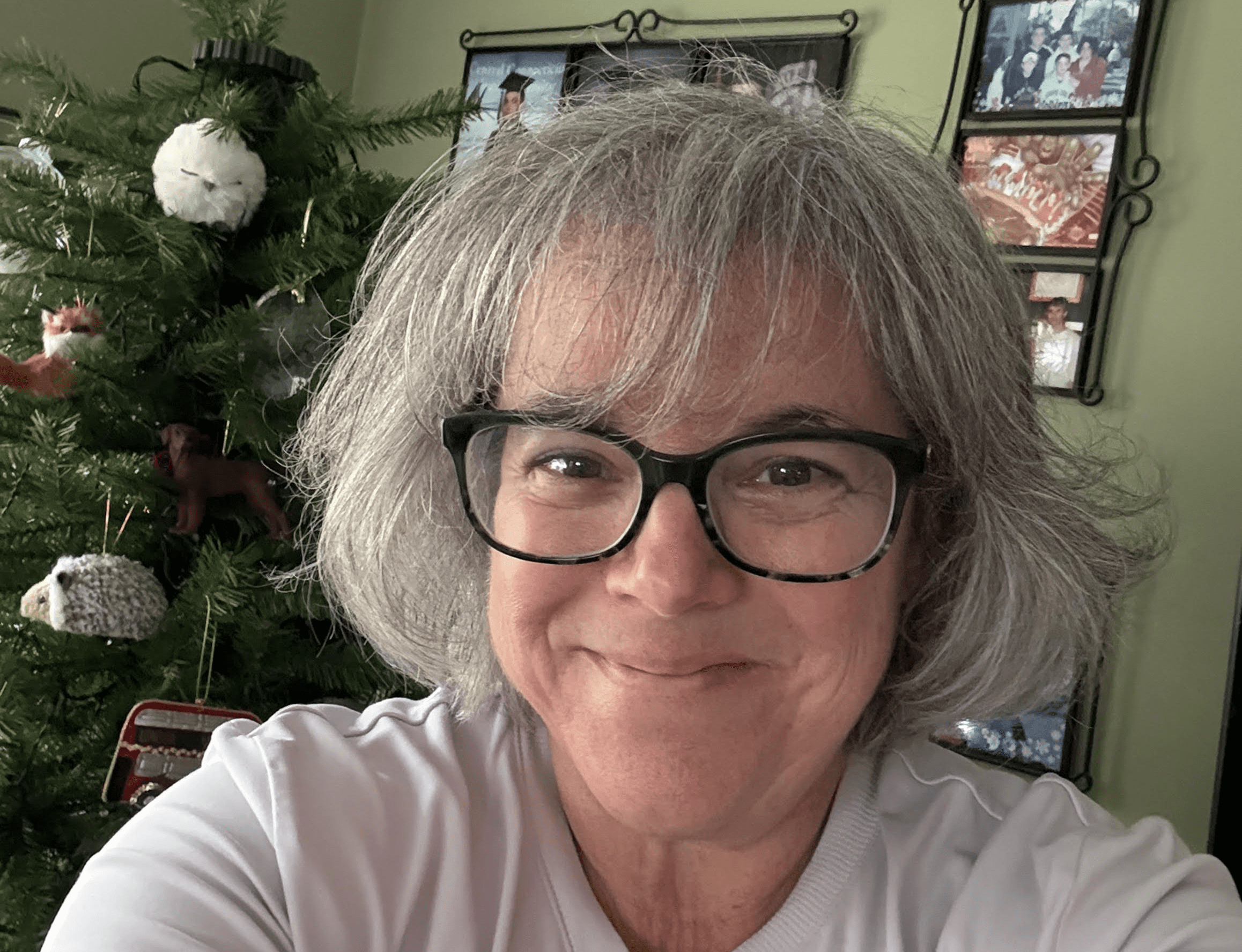
Marie DelGreco’s hormonal symptoms began at age 37 following a total hysterectomy. Now 60 years old, she’s finally found support. We spoke with Marie about her challenging reproductive health journey, the through-lines of medical sexism for women across ages, and how her Elektra care team helped her find relief.
On her difficult reproductive health journey
I had three very difficult pregnancies, all C-sections. After my last child was born, I kept saying I had pain— I couldn’t even sneeze. My gynecologist, who knew my history, kept telling me to just give it time. I could almost see the eye roll every time I would go in. Flash forward and at 37, I decided to have a hysterectomy because the pain was just unbearable.
The procedure was supposed to be around 2.5 hours but eight hours later, I was still there. It turns out that my uterus, instead of going back into its normal position after my last child, had adhered to my abdominal wall and created the equivalent, in my gynecologist’s words, of a “concrete barrier” so that every time I moved, I was ripping scar tissue. It took three doctors to close me up — my gynecologist, a plastic surgeon, and a urologist — because my bladder was completely covered in scar tissue. Looking back now, I can say that’s when my problems started.
On the cost of unmanaged symptoms
The first noticeable thing was losing my hair. I always had this huge, mopping, curly head of hair, and I don’t have that anymore. My body was changing and I didn’t know anything about perimenopause. Over the years, a lot of things were just dismissed — the pain I was in all the time, the brain fog, the things I have names for now that I didn’t have then. My doctors said I had the blues and that they couldn’t give me hormones but that they could give me antidepressants. So, they put me on Zoloft.
Around this time, the hot flashes started. I was sweating profusely from the time I woke up to the time I went to bed, to the point where I didn’t exercise anymore. I didn’t feel like doing anything. I found no joy in little things, and I didn’t want to have sex because who wants to be a big, sweaty mess?
I went to Iceland about two years ago, and it was in the mid-30s with 80 MPH winds. I had no coat on, and I was soaked through my hair while everybody around me was in full head to toe gear.
“Over the years, a lot of things were just dismissed — the pain I was in all the time, the brain fog, the things I have names for now that I didn’t have then.”
On jumping through hoops to access treatment
Every year I would go to the gynecologist and say “I just can’t stand the sweating, there’s got to be something.” I had an appointment with my gynecologist a couple months ago when I started to hear about hormonal menopause treatments on Instagram. She had me go through all this expensive testing to check my clot levels, cardiovascular health, and other risk factors and said that if everything checked out, she’d start me on the patch.
My tests all came back clear, but a month went by with no reply. She decided that she wanted my PCP’s approval. So, I spoke with my primary, who said it wasn’t a ‘no’ but that she couldn’t be the deciding factor.
On working with her Elektra Clinician and Coach
I did look into some of the other companies, but I just wasn’t comfortable with their procedures and the fact that they weren’t part of insurance. Then, I found out about Elektra on Instagram. A big draw for me was that it worked with my insurance company, and the ease of making an appointment. I saw a doctor and within 36 hours of starting the patch, I stopped sweating. And not only did I stop sweating, but I started saying yes to things.
I also talked to a Coach and she gave me some really good advice; it was a nice complement. When I met with my doctor, it was very new so I was nervous. But once I had that visit, I was able to go on some message boards on the [Elektra platform] to see what other people are dealing with. By the time I spoke with Beth, my Coach, I was a little bit more informed on my journey and other people’s journeys, so I felt a little bit I could speak more freely.
“A big draw for me was that it worked with my insurance company, and the ease of making an appointment.”
On the complicated, bittersweet nature of relief
Once the medicine started working, I was pissed just knowing that I could have been this much happier 10 years ago, 15 years ago. I’ve had some serious health issues in my life, and you’d think that that would help, but it actually doesn’t, because we’re just not heard. And, it doesn’t help that a lot of women won’t talk about it or admit that they’re suffering. We have this weird way of rationalizing; “It’s got to be this” or “ It’s just stress at work.” Now I’ve just decided that the next 20 years are just going to have to be the best that I can make them to make up for all the things that I missed out on.
READ MORE:
- An Elektra Member Talks Menopausal Rage and Her Path to Relief
- An Elektra Patient Opens Up About The Menopause Symptoms That Took Her (And Her Doctors) By Surprise
- An Elektra Member Talks Debilitating Hot Flashes…and How She Found Relief
- Brain Fog, Mood Swings, and Hot Flashes: How This Elektra Patient Took Back Control
- How Unmanaged Symptoms Landed this Patient in the ER, And How She Finally Found Support